The Quiet Pattern of a Shared Evening
Shared evening etiquette in Bến Tre can feel easier with attentive greetings, flexible seating, and considerate farewells, without assuming one local routine.

Shared evening etiquette in Bến Tre is best approached through attention to the people hosting, rather than assumptions about a single local routine. A guest can begin with a greeting, notice how the room is being used, and follow the conversation’s pace.
Preparing the space
If you are hosting, sweep the area you plan to use, set out chairs that are available, and place tea or water within reach if you intend to serve it. These are practical hosting choices, not claims about what every household in Bến Tre does.
Keep the arrangement flexible. If guests arrive while you are still getting things ready, greet them when you can and let them know where they may sit or wait.
Beginning with greetings
A brief greeting to the host and a question about someone’s day can open a visit without imposing a formal script. The right wording and order depend on people’s relationships and preferences.
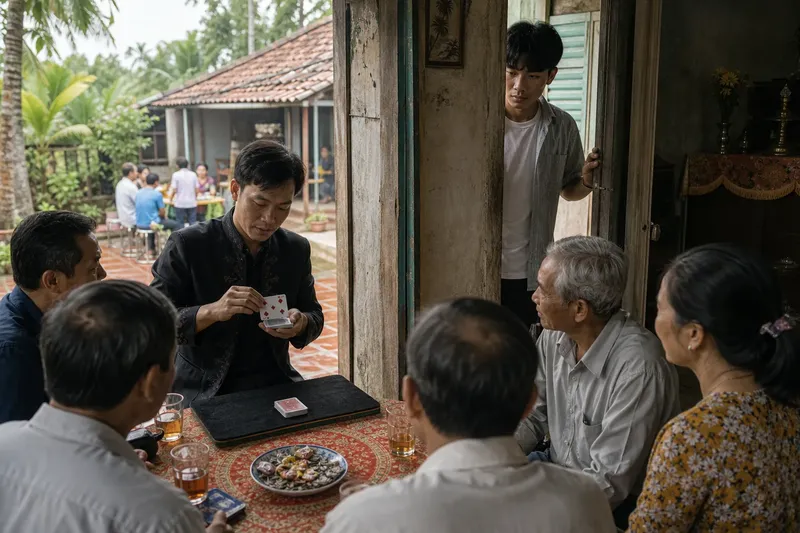
Imagine a neighbor arrives while the host pours tea and two relatives are talking. The neighbor greets the host, acknowledges the relatives, and waits for a pause before taking a chair; the conversation can continue without an interruption. This invented situation illustrates a considerate option, not a customary sequence for the province.
Forms of address can be hard to judge if you are unfamiliar with the relationships. Listen to how people address one another, and ask the host quietly if you remain unsure.
Letting conversation breathe
A pause may simply give someone time to finish a thought or take a sip. You can wait briefly before changing the subject, then offer a simple question if the group seems ready to continue.
Casino themes might come up in a story, joke, or passing reference, but a single mention does not establish what a group thinks or what local life is like. Respond to the speaker’s actual story, and follow the group if it moves to another subject.
Say a guest mentions a casino-themed poster while describing a trip. If others ask about the trip, the guest can continue; if the conversation shifts, the guest can follow that new topic instead of pressing the reference.
Keeping the visit flexible
A recurring invitation need not follow an identical schedule or arrangement. Hosts and guests can adjust to who is available, how much space there is, and what feels comfortable to those present.
- Seating: If everyone has a comfortable place and the doorway is clear, keep the arrangement; if the area feels crowded, move a chair or invite someone to another available space.
- Arrival: If the host is ready, exchange greetings; if the host is occupied, acknowledge them and wait nearby without interrupting.
- Forms of address: If you hear a term used clearly for someone, follow it when appropriate; if the relationship is unclear, ask the host privately or use a neutral greeting.
- Conversation: If someone is finishing a thought, listen; if the group has moved to another subject, join that topic rather than pulling everyone back.
- Silence: If people seem comfortable, let the pause stand; if they appear ready to talk, ask a simple, open question.
- Departure: If a guest gathers their belongings, offer a farewell; if they choose to explain why they are leaving, listen without pressing for details.
Imagine a host expects a neighbor and two relatives, has two chairs ready, and has prepared tea. When the neighbor arrives, the host offers a seat; when a relative arrives and the space feels crowded, the host moves a chair from the porch. The observable result is that the new arrival has a seat while the group can keep talking. This is an invented planning example, not a report about a particular home.
Ending the visit
A simple thank-you and farewell can suit a visit, whether a guest says goodbye to everyone together or speaks with the host first. Follow the tone already set by the people present rather than expecting one prescribed form.
If someone moves toward the exit or gathers their belongings, acknowledge the departure without demanding a reason. A guest can thank the host and greet nearby people before leaving.
Shared evening etiquette?
Does a gathering need a fixed start time?
Not necessarily. Agree on a time if it helps the host and guests coordinate; otherwise, ask what timing works for the people involved.
What should a guest do when conversation pauses?
Wait a moment and see whether someone is still speaking or simply taking a break. If the group seems ready to continue, offer an open question without asking anyone to explain the silence.
How can a visitor choose a form of address?
Listen to how people address one another, but do not assume a term applies to every relationship. If you are unsure, ask the host discreetly or use a neutral greeting.
How can a guest leave politely?
Thank the host, acknowledge others nearby, and follow the group’s tone. A guest can leave without giving a detailed explanation.
Gestures in context
Greetings, pauses, and farewells are choices whose meaning depends on the people and the moment. Treating them as flexible cues, rather than fixed rules about Bến Tre, helps a visitor respond with consideration.
For shared evening etiquette in Bến Tre, the most useful guide is what the host and guests signal in front of you: where a seat is offered, when a speaker has finished, and how people say goodbye. When a cue is unclear, a quiet question is often more respectful than guessing.