How Bến Tre Storytelling Shapes Casino Tales
See how Bến Tre storytelling techniques shape casino tales through pacing, scene structure, and recurring objects, so you can explain what each detail does.
Bến Tre storytelling shapes casino tales through the order of events, the placement of a scene, and the work a recurring object performs. These craft choices help readers explain how a story creates tension or humor without mistaking its invented details for local custom.
Scene structure
A scene is a stretch of narrative organized around an event, such as a card trick at a family gathering. A writer can begin before the trick, cut directly to its reveal, or interrupt it with another action; each arrangement changes what the reader notices first.
In a story set in Bến Tre, place can shape that structure without serving as decoration alone. A character might cross a familiar courtyard before entering a room where a casino-themed performance is underway, making the movement part of the transition into the scene.
Pacing and suspense
Pacing is the speed at which a story presents events. Short sentences and quick exchanges can make a card game feel brisk, while pauses and withheld details can delay a reveal.
Suspense depends on what the reader knows and when. If a narrator mentions that a card has vanished before explaining how, the reader waits for the missing action; if the story shows the trick first, attention shifts to the characters’ reactions.
Recurring objects
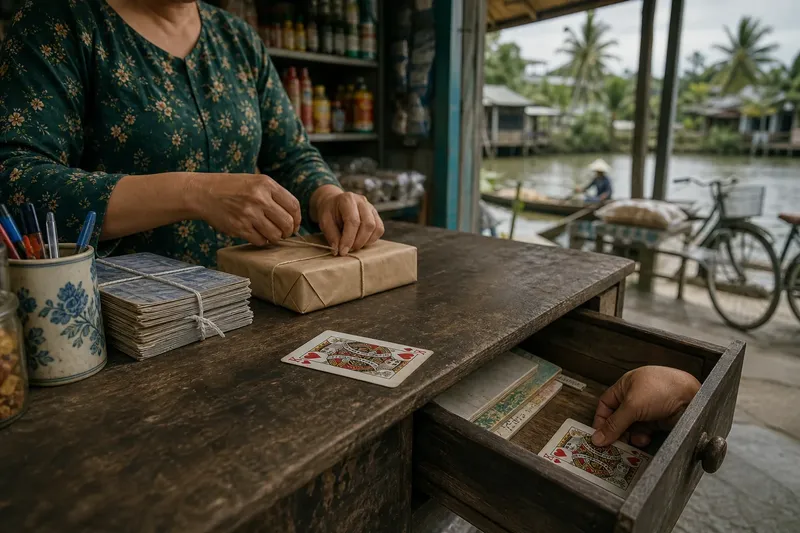
A motif is an image or object that returns with changing significance. A deck of cards might first appear as a prop, then reappear when a character recalls an earlier argument, linking separate scenes without proving anything about local practice.
Track what changes each time the object returns: who handles it, where it appears, and how characters respond. If nothing changes, it may simply be scenery; if its role shifts, the repetition can mark a change in a relationship or mood.
Transitions and setting
Transitions connect one scene to the next. A sound, gesture, or object can carry the reader from a gathering into a later memory, while a direct cut can create surprise or leave a deliberate gap.
Setting becomes part of the technique when it affects movement, timing, or access to information. A doorway can let one character overhear a conversation, for instance; that detail shapes the scene’s structure rather than making a claim about how people in Bến Tre generally behave.
How does craft shape the scene?
Where does the scene begin?
Notice whether the scene starts before a casino-themed event or at its most charged moment. The opening point determines which background details the reader receives before the action.
What does the story delay?
Look for an explanation, action, or reaction that arrives later than expected. That delay can build suspense, create comedy, or focus attention on a character’s uncertainty.
Why does an object return?
Compare the object’s role each time it appears. A changed handler or meaning can connect scenes; an unchanged prop may be there mainly to establish the setting.
How does the setting affect movement?
Follow where characters enter, leave, or pause, and ask what the location lets them see or hear. This reveals the setting’s practical role in the scene without treating the fictional arrangement as a local custom.
A worked reading
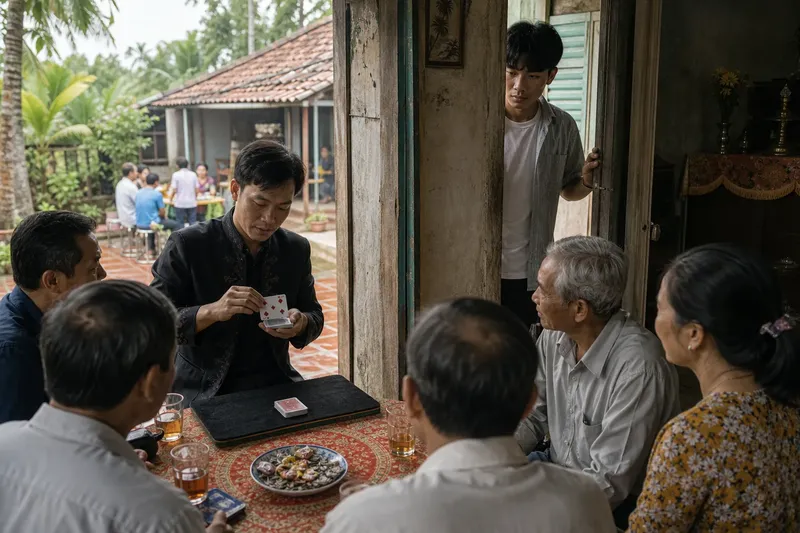
Imagine an invented story with these starting details: a family gathering in Bến Tre, one shuffled deck, a performer preparing a card trick, and a cousin waiting in the doorway. The opening shows the cousin watching the performer place the deck on a table; the next scene returns to the same deck after the gathering, when the cousin finds it tucked into a program.
First, mark the two appearances of the deck: it is a performance prop in the opening scene and a link to the earlier event in the later one. Next, note that the doorway gives the cousin a place to watch without joining the performance. The resulting reading is that the repeated object connects scenes and the blocked entrance shapes the cousin’s role; neither detail establishes a local custom.
Craft checks
Use these observations to decide what a story’s construction supports and where interpretation should remain open:
- If a scene begins with an event already underway, note what the reader must infer; if the missing setup prevents a clear reading, describe that gap rather than inventing a cause.
- If a reveal is delayed, identify the detail being withheld; if no later passage supplies it, leave the suspense unresolved instead of claiming the story explains the event.
- If a card deck returns, compare who handles it and where it appears; if its role changes, connect the scenes, but if it does not, treat it as a recurring prop without assigning extra meaning.
- If a doorway or courtyard changes what a character can see or hear, describe that effect; if the location has no effect on the action, treat it as background rather than a plot mechanism.
- If dialogue interrupts a performance, check whether it changes the pace or the scene’s focus; if it does not, describe the interruption as a transition, not as proof of a broader custom.
- If the narrative shifts to a memory, identify the cue that prompts the shift; if the text gives no cue, note the transition as abrupt and avoid supplying an unstated reason.
Reading the craft
To explain how Bến Tre storytelling shapes casino tales, point to a specific construction choice: where a scene starts, what it delays, or how an object changes across appearances. That kind of close reading keeps the focus on the writer’s technique.
When a story also makes a claim about local practice, separate that claim from its craft. Describe what the text establishes about its characters and setting, and seek relevant local context before repeating a fictional detail as fact.